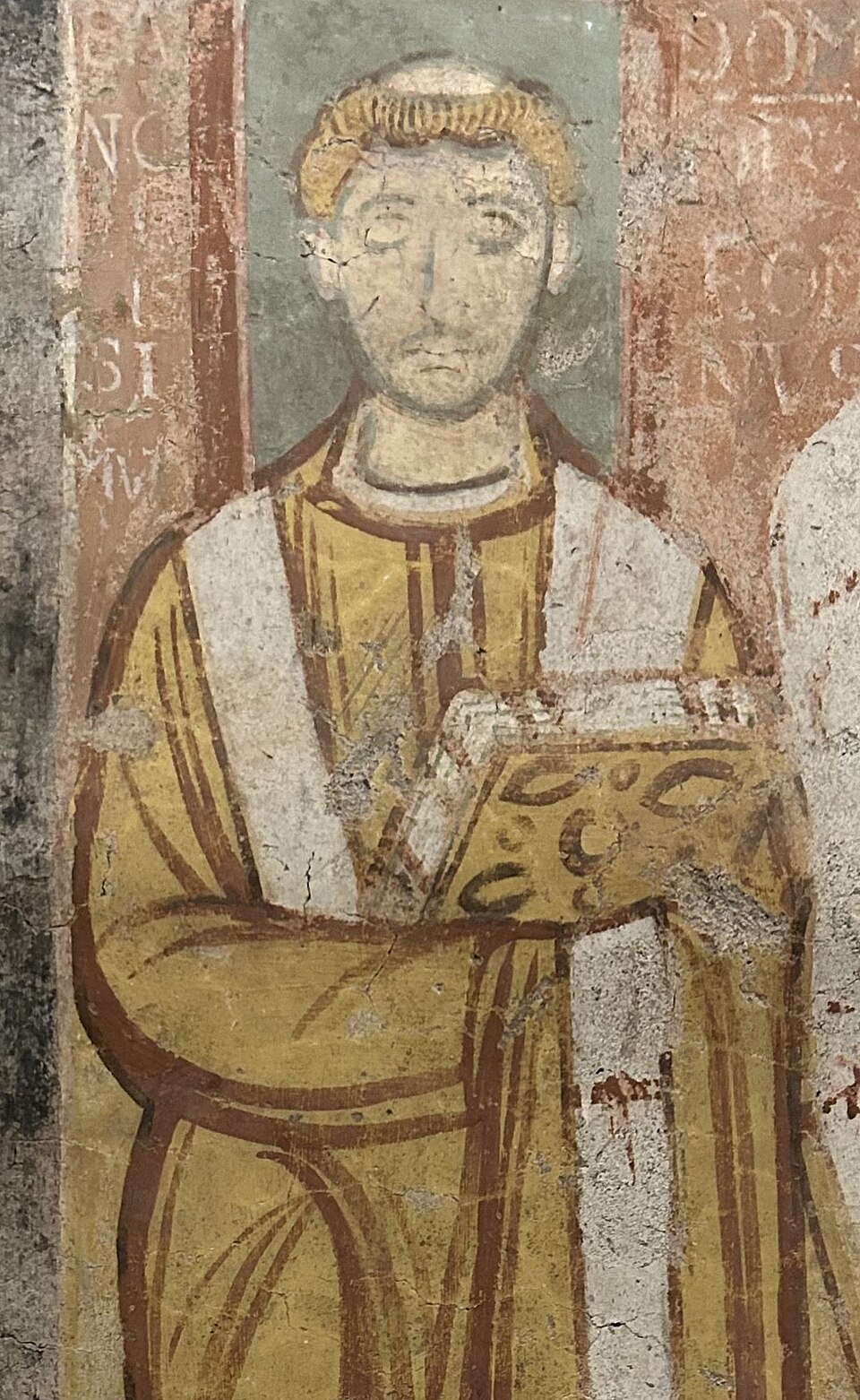
Their Story
Leo IV's early life was unremarkable—a Roman boy educated in monastery silence, working his way up through the Church hierarchy without fanfare. He was a cardinal-priest, competent but not celebrated. Then came 846: Saracen raiders descended on Rome like a nightmare made flesh. They attacked the holiest places. They shattered sanctuaries. The city trembled. People asked: where is God's protection?
When Leo was unanimously chosen pope in April 847, he inherited a broken city and a broken people. But instead of retreating into prayer or despair, he did something radical. He got to work. He rebuilt the damaged basilicas with his own hands' direction—Saint Paul's, Saint Peter's—restoring their glory stone by stone. He didn't just repair buildings; he was repairing faith itself.
But Leo knew repairs weren't enough. Fear still gripped Rome. So he did the unthinkable: he united Italian cities into a military coalition. He organized a naval alliance and led them to victory at the Battle of Ostia against the Saracens in 849. Then he built the Leonine Wall—massive fortifications around Vatican Hill that still stand today. A pope who chose both prayer and protection. He transformed himself from an anonymous ecclesiastic into a shepherd willing to defend his flock by any means necessary, proving that faith and action aren't opposites—they're partners.
Why People Pray to Pope Leo IV
In our age of threats and uncertainty, Leo IV speaks to those paralyzed by fear. He shows us that panic isn't the only response—that we can build, protect, and create safety for our communities. People pray to him when facing overwhelming odds, when institutions feel threatened, when they need courage to act decisively. He's the saint for leaders in crisis, for those who must make hard choices, and for anyone learning that faith requires both conviction and action.
Lasting Impact
Leo IV's walls—both literal and symbolic—protected Rome and Christianity through its darkest medieval hour. His legacy isn't just the Leonine fortifications tourists visit today; it's the model of a leader who refused to accept defeat. He showed that spiritual authority and practical defense aren't contradictions. Eight centuries later, his example still teaches that genuine faith meets danger with both prayer and wisdom.