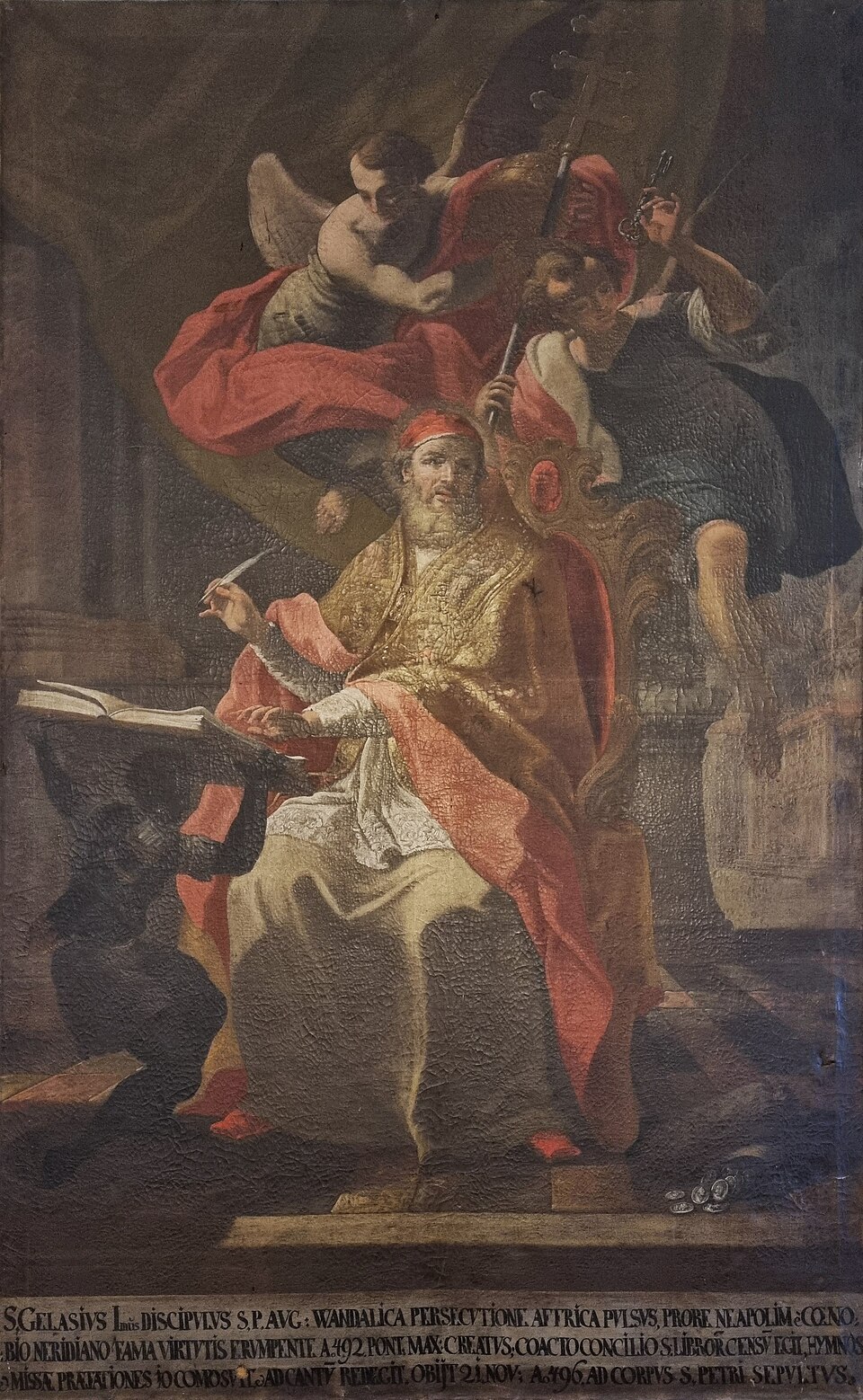
Their Story
Gelasius arrived at Rome's highest office carrying the weight of a fractured Church. Born in Africa or Rome to humble origins, he rose through the ranks as a prolific writer and papal aide—but success brought suffocating pressure. The Eastern and Western Churches were locked in bitter theological conflict. Imperial politics demanded he choose sides absolutely. His predecessor's rigid stance had isolated the papacy. Gelasius faced a devastating choice: enforce doctrinal purity through excommunication and severance, or compromise the faith he'd spent years defending.
He refused the false binary. Instead, Gelasius did something radical: he maintained strict Catholic orthodoxy while building cordial relations with the Ostrogoths—heretics by strict definition, yet fellow Romans facing collapse. He wrote with piercing clarity about papal authority, not to dominate, but to preserve truth. He demanded obedience to doctrine while showing pragmatic mercy. His contemporaries called him learned, humble, austere, devoted to the poor—a man who kept himself poor so others wouldn't hunger.
In just four years, eight months, and eighteen days, Gelasius reframed what Christian leadership meant. He proved that conviction and compassion weren't enemies. He died November 21, 496, exhausted but unbending, leaving behind letters and councils that would echo through centuries. His legacy wasn't perfect unity—it was something harder: the model of a leader who stood firm while reaching across divides.
Why People Pray to Pope Gelasius I
Today, Gelasius speaks to those caught between competing loyalties—career ambitions versus integrity, family expectations versus conscience, holding boundaries while showing mercy. People pray to him when facing impossible choices that seem to demand betraying either their principles or their relationships. He teaches that intellectual rigor and human kindness aren't contradictions. In our polarized moment, his example of steadfast doctrine paired with pragmatic dialogue offers a third way: remain faithful without becoming cruel.
Lasting Impact
Gelasius I established the philosophical framework for papal authority that shaped the Catholic Church for centuries. His writings on the separation of ecclesiastical and temporal power influenced medieval political thought. More profoundly, he demonstrated that principled leadership requires both uncompromising truth and strategic compassion—a model leaders across faiths still reference today.