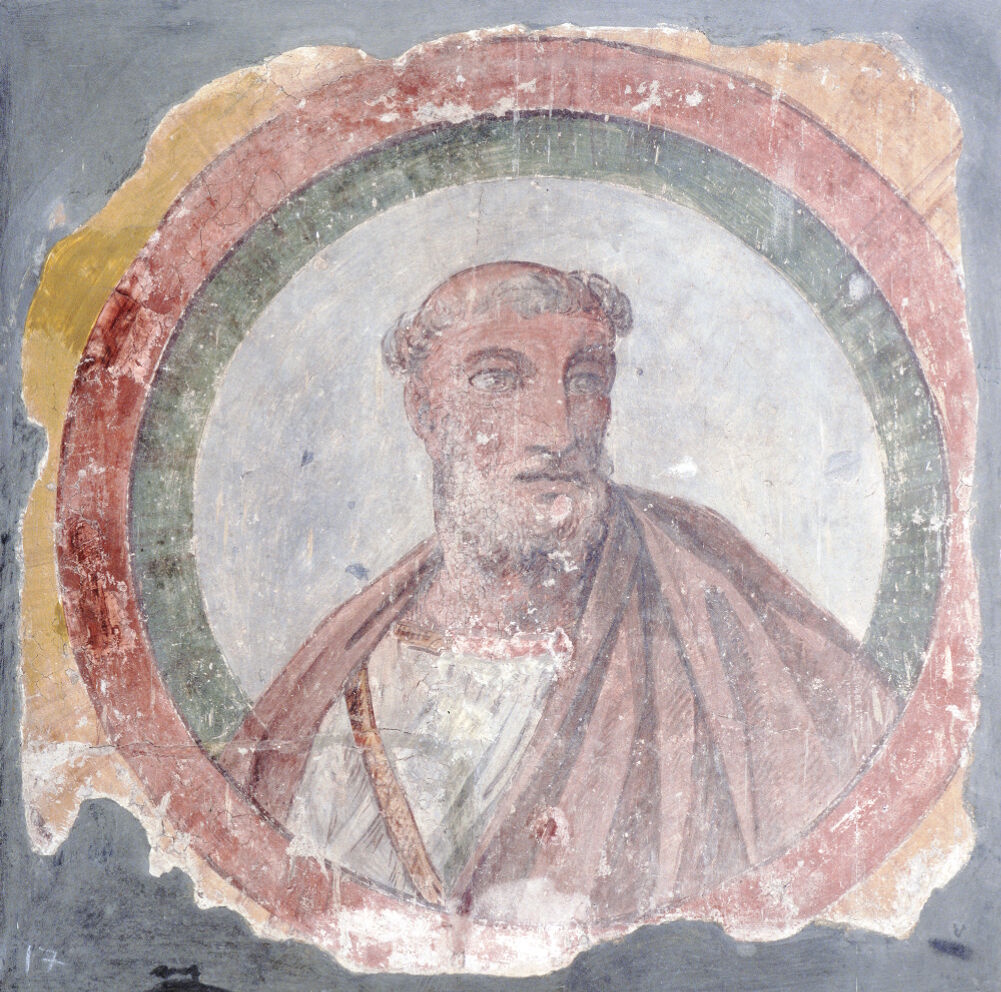
Their Story
Callixtus began his life in chains—literally. As a young slave in Rome, he was entrusted by his master Carpophorus to manage alms collected for the Church's poorest members. But Callixtus made a catastrophic mistake. He mishandled the funds, squandering money meant for widows and orphans. When discovered, his master's rage was swift and merciless. Callixtus was beaten brutally and thrown into the mines of Sardinia—a death sentence disguised as labor. In those dark tunnels, surrounded by suffering humanity, something shifted inside him. He had failed spectacularly. He had let down those most vulnerable. Yet in that broken place, he encountered Christ's forgiveness in a way the comfortable never could.
Miraculously freed years later through imperial intervention, Callixtus emerged transformed—not hardened by his suffering, but deepened by it. He was ordained deacon around 199 and eventually rose to become Pope around 218, serving until his martyrdom in 222. But his greatest legacy wasn't his title; it was his radical mercy. He welcomed back sinners and schismatics that others deemed unredeemable. He understood, viscerally, what it meant to be discarded and forgotten. His compassion wasn't theological abstraction—it was forged in Sardinian mines. He established sacred cemeteries for the poor and gave dignity to those society had abandoned.
When persecution came under Emperor Elagabalus, Callixtus faced his final test with steady courage. He died a martyr's death, but not before redefining what Church leadership meant: not authority from above, but solidarity from within the suffering.
Why People Pray to Pope Callixtus I
Cemetery workers honor Callixtus as their patron because he understood death's reality and society's invisible grief. Today, people turn to him when carrying shame over past failures—he proves that our worst moments don't define us. Those working with society's forgotten, grieving the "wrong" losses, or wrestling with whether they're beyond redemption find in Callixtus a saint who whispers: your struggle contains your salvation. His radical forgiveness speaks powerfully to modern seekers tired of judgment.
Patron Saint Of
Lasting Impact
Callixtus revolutionized early Church practice by demonstrating that mercy trumps purity laws. He established the first organized Christian cemeteries, giving the poor sacred rest. His papacy marked a shift from exclusivity to radical inclusion—proving the Church's strength lies not in who it excludes, but in whom it embraces. His memory endures as a testament to transformation through suffering.