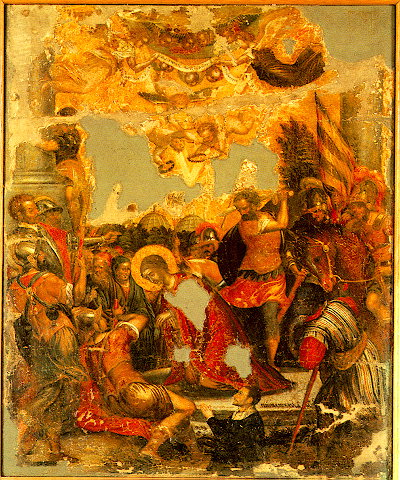
Their Story
Born into a Christian family during Rome's height, Paraskevi faced an invisible pressure that many understand today: the weight of expectation. Her parents had prayed for years to have a child, and when she finally arrived on a Friday—the day of Christ's suffering—they named her with sacred purpose. Growing up devout and intellectually gifted, she rejected suitor after suitor, choosing solitude over the security of marriage. The world around her offered comfort, status, and safety. She could have simply lived quietly.
But something burned inside her. After her parents died, she didn't cling to their inheritance or fade into quiet widowhood. Instead, at 30, she gave everything away and became a traveling preacher across the empire. For a woman in the 2nd century, this was radical—vulnerable, dangerous, and countercultural. She walked into villages where Roman soldiers were watching, where speaking Christ's name meant arrest. She was detained multiple times, interrogated, beaten. Authorities blamed her preaching for Rome's troubles, using her as a scapegoat for the empire's fears.
When Governor Tarasius offered her a choice—renounce her faith or face execution—Paraskevi refused to bend. It wasn't reckless bravado; it was the clarity of someone who had already surrendered everything that mattered less than truth. Her final act wasn't defiance of Rome, but fidelity to something deeper. She died as she lived: unflinching, faithful, and wholly present to her conviction. In choosing martyrdom, she transformed suffering into witness.
Why People Pray to Paraskevi of Rome
Paraskevi is invoked as the healer of blindness—both physical and spiritual. Today, people turn to her when facing difficult choices between comfort and conscience, when pressure mounts to compromise their values, or when they struggle to see clearly through confusion and fear. She teaches us that true sight comes from unwavering conviction, not from avoiding hardship.
Lasting Impact
Paraskevi's legacy endures across Eastern Orthodox and Eastern Catholic traditions as a symbol of unshakeable faith under persecution. Commemorated on July 26, she reminds believers that conviction without compromise carries transformative power—that a single life lived authentically can inspire generations to choose truth over comfort.