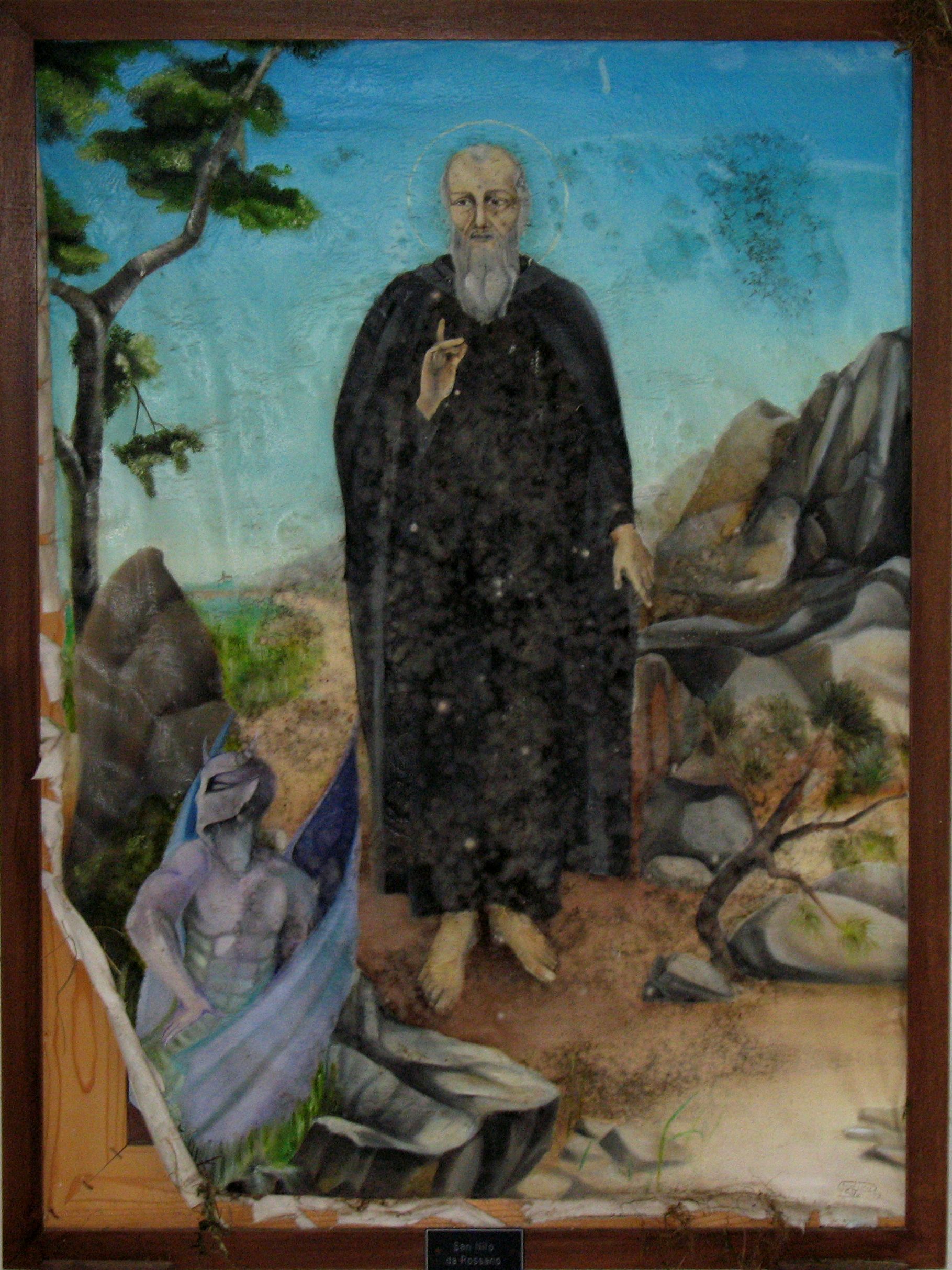
Their Story
Nilus the Younger was born into displacement. A Griko monk from Byzantine Calabria, he lived during an era of cultural upheaval—caught between Eastern and Western Christian traditions, between empires in flux. Like many spiritual seekers, he struggled with the weight of belonging nowhere. He spent years wandering, questioning whether his monastic vocation could even matter in a fractured world. The isolation was profound. He knew the Greek Orthodox tradition intimately, yet found himself increasingly isolated as Latin Christianity dominated the Italian peninsula. For decades, this felt like failure—a calling without a clear path.
But Nilus refused to let displacement destroy him. Instead, he transformed it into vision. Around 980 AD, he founded a monastic community that did something radical: it honored both Eastern and Western traditions, creating a living bridge where others saw only division. He became a confessor and spiritual guide whose wisdom transcended cultural boundaries. At an age when many would have retreated into bitterness, Nilus founded the Abbey of Grottaferrata near Rome—a monastery that would become a beacon of unity for centuries. His calligraphic gifts and spiritual writings preserved Byzantine theology for the West. By his death in 1005, at nearly 95 years old, he had transformed his rootlessness into a permanent home for seekers of all traditions.
Why People Pray to Nilus the Younger
People turn to Nilus today when facing displacement, cultural alienation, or the fear that their unique gifts don't fit anywhere. He's the patron saint for anyone caught between worlds—immigrants, interfaith families, those struggling to bridge divides. In our fractured age, Nilus reminds us that our outsider perspective isn't a curse; it's an opportunity to build something unprecedented. Scribes, artists, and writers invoke him for clarity and sacred purpose.
Patron Saint Of
Lasting Impact
Nilus the Younger founded Italo-Byzantine monasticism, creating a living synthesis of Eastern and Western Christianity that endured for centuries. His Abbey of Grottaferrata still stands near Rome—a testament to his belief that division could become communion. He proved that spiritual authority transcends cultural boundaries, influencing popes and emperors alike.