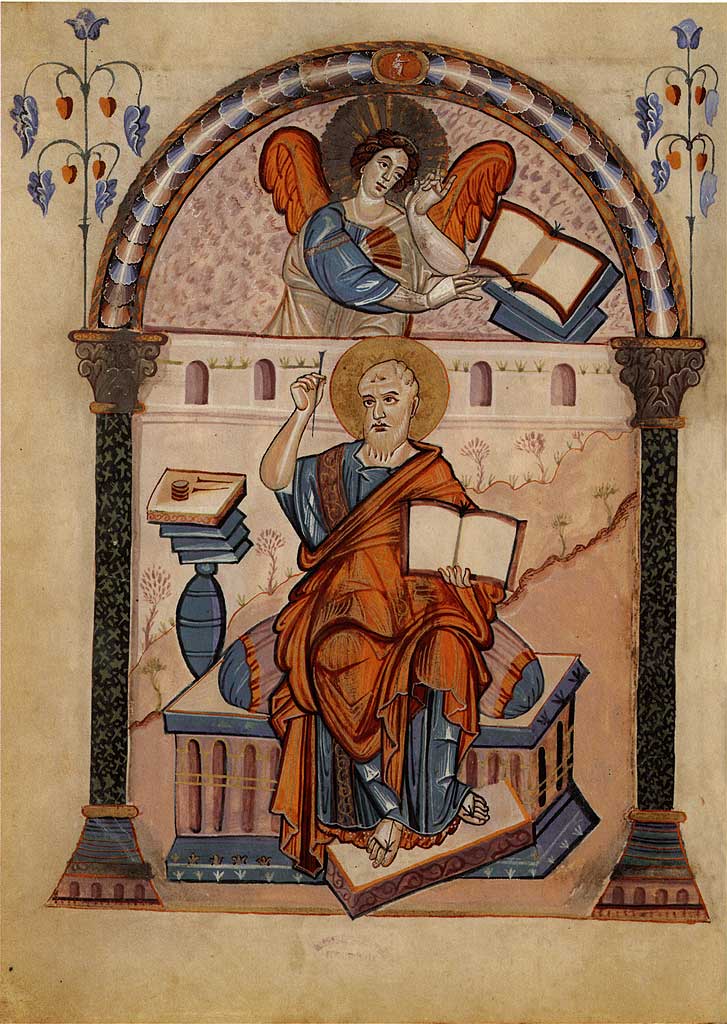
Their Story
Matthew's life began in shame. As a tax collector in first-century Capernaum, he was despised—not just poor, but complicit in oppression. Tax collectors were viewed as traitors to their own people, extorting money for Rome's occupation. Matthew lived isolated, financially comfortable but spiritually hollow. His profession marked him as corrupt, unredeemable in the eyes of his community. The weight of that rejection, that sense of being fundamentally unworthy, likely consumed him.
Then Jesus called him. Not to condemn, but to follow. In a single moment, Matthew experienced what he'd never known: unconditional acceptance from someone who saw his worth beneath the shame. He left everything—not out of obligation, but from shock and gratitude. He became an apostle, then an evangelist, eventually writing the Gospel that bears his name: a meticulous, compassionate account that emphasizes Jesus's radical inclusion of the outcast.
Matthew spent his final decades traveling and writing, carrying Christ's message to Ethiopia and beyond. Tradition holds he was martyred around 68 CE, remaining faithful to the end. What makes his story pierce the heart is this: the man society deemed worthless became one of Christianity's four evangelists. His Gospel would shape billions of lives across centuries. Matthew didn't just experience forgiveness—he became its living testimony, proving that no one is beyond transformation.
Why People Pray to Matthew the Evangelist
People turn to Matthew when they're drowning in shame or struggling with their past mistakes. Those with careers they regret, those marked by society as 'the wrong kind,' those who fear they're unforgivable—Matthew meets them there. He whispers: I too was despised. I too felt unredeemable. His transformation offers not platitudes, but proof that radical grace changes everything. Modern seekers pray to him when they need permission to start over, to believe they're more than their worst choices.
Lasting Impact
Matthew's Gospel became Christianity's most widely circulated account of Jesus's life, shaping theology, art, and faith across two millennia. His symbol—the angel or winged man—represents divine transcendence reaching human incompleteness. More profoundly, Matthew's life itself became Christianity's ultimate metaphor: that God sees value where the world sees waste, and calls to transformation those the world has already written off.