Their Story
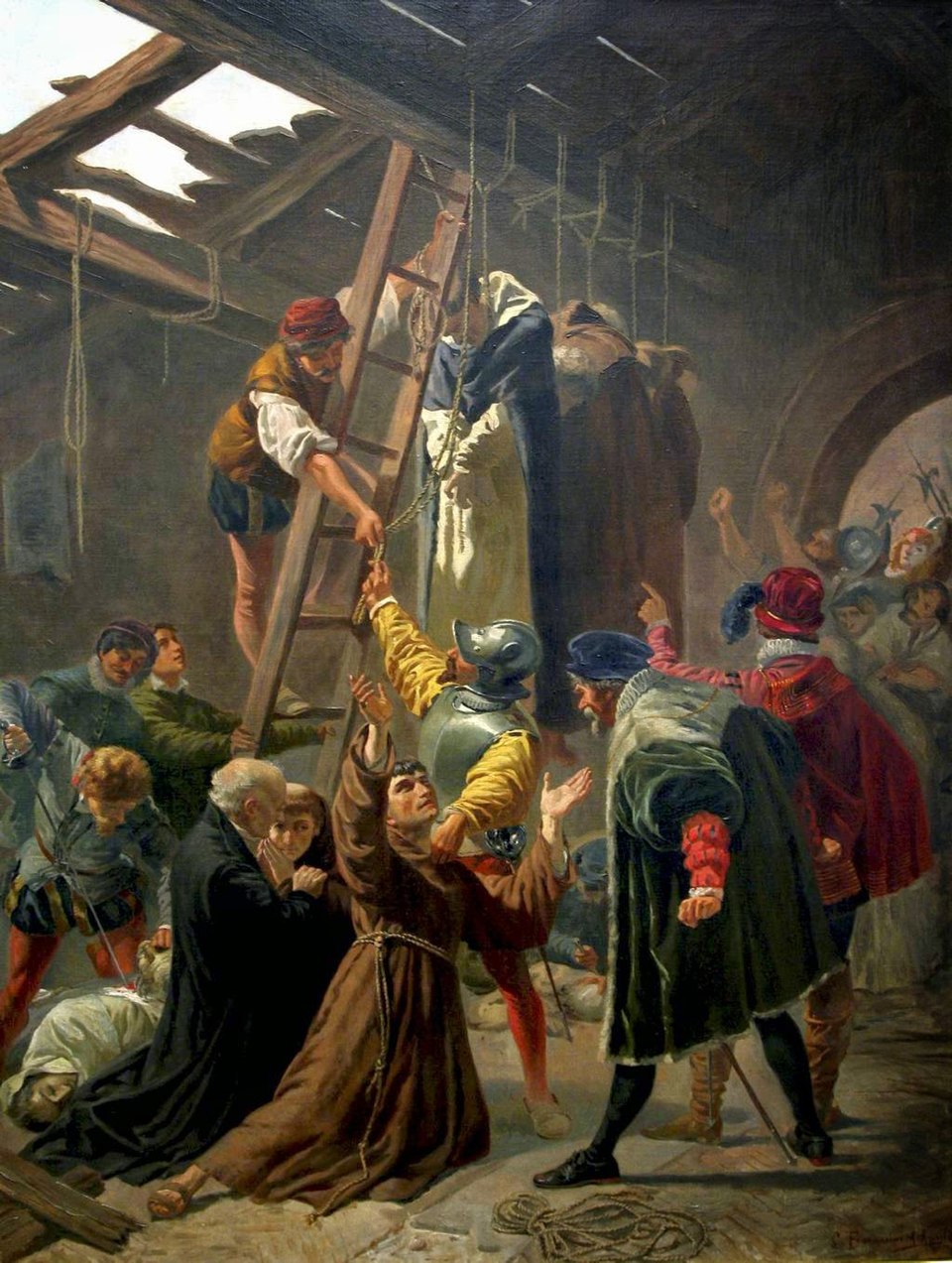
In 16th-century Holland, these 19 Catholic clerics—both monks and parish priests—lived in genuine fear. Religious violence was escalating. Protestant Calvinist forces were seizing power, hunting Catholic clergy with methodical brutality. These men knew the danger. Some had already witnessed colleagues disappear. They faced an impossible choice: flee their parishes and abandon their flocks, or stay and minister to Catholics growing desperate for spiritual comfort in a time of chaos.
They weren't heroes by temperament. Many were scholars, administrators, simple friars—men more comfortable with prayer books than conflict. Some had spent decades serving quietly in obscure villages, never expecting their faith would demand their lives. But when the Watergeuzen (militant revolutionaries) captured Brielle in 1572, these 19 refused to renounce their priesthood. They would not deny the Eucharist. They would not abandon Catholic teachings to save themselves.
On July 9, 1572, they were hanged together. Not as political prisoners or soldiers, but as witnesses. Their execution wasn't swift or merciful—it was a public statement. Yet something unexpected happened. Their deaths didn't silence the faith they fought for; it amplified it. Catholics across Europe heard their names. A Franciscan friar named Nicholas Pieck, an elderly priest named Theodorus van der Eem, young friars like Joannes van Hoornaer—they became living proof that conviction transcends fear. Their willingness to die rather than betray their beliefs shattered the narrative that violence could extinguish faith.
Why People Pray to Martyrs of Gorkum
Catholics and people of all faiths turn to the Martyrs of Gorkum during times of persecution, religious conflict, or when facing pressure to compromise core values. They inspire those standing against intolerance, those protecting vulnerable communities, and anyone discovering that true freedom sometimes demands sacrifice. In our fractured age, their example reminds us that conviction—not comfort—creates lasting change.
Lasting Impact
Canonized in 1867, the Martyrs of Gorkum became the first official saints of the Dutch Reformation era. Their shrine in Brussels stands as a pilgrimage site for those seeking intercession during religious persecution worldwide. They represent the Catholic Church's recognition that holiness often blooms not in peace, but in the courage to witness truth when everything demands silence.