Their Story
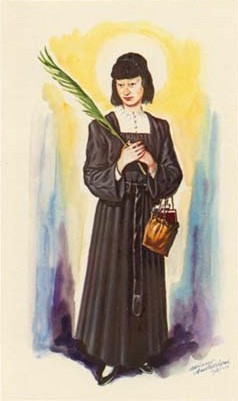
Magdalene was born into terror. Around 1620, when she was barely a child, her Christian parents were martyred in Nagasaki's brutal religious purge. The Tokugawa Shogunate had declared Christianity illegal, and families like hers paid with their lives. Orphaned and alone in a hostile world, Magdalene could have hidden her faith. Many did. She could have disappeared into silence, forgotten among the thousands of persecuted Christians. Instead, she chose vulnerability.
When Augustinian missionaries arrived in 1623, Magdalene saw an opening. Despite her grief and the constant danger, she stepped forward as a translator and catechist. At just 12 or 13 years old, she became the friars' bridge to the hidden Christian community, teaching catechism to children and interpreting their faith in a language authorities could not easily suppress. She took vows as a tertiary in 1625, formally dedicating herself to a religious life amid persecution. It was an act of defiance dressed as devotion.
But choosing to serve openly in a time of crackdown meant choosing a probable end. In October 1634, Magdalene was arrested alongside the missionaries she had served. On October 15th, at just 22 or 23 years old, she was executed—a martyr like the parents she had lost. What began as a child's lonely grief transformed into purposeful witness. She refused to let her family's sacrifice be erased. In her brief life, Magdalene proved that courage isn't the absence of fear; it's continuing to serve, to speak, to translate love even when the price is everything.
Why People Pray to Magdalene of Nagasaki
Magdalene speaks to anyone grieving sudden loss or navigating hostile circumstances beyond their control. People turn to her when facing impossible choices—when staying silent feels like betrayal, but speaking feels dangerous. She reminds us that our vulnerability, our orphaning, our loneliness can become sources of unexpected strength. She intercedes for translators, interpreters, and bridge-builders working across divides, and for those persecuted for their faith or identity today.
Lasting Impact
Magdalene was canonized in 1987 by Pope John Paul II as one of the 16 Japanese Martyrs, her feast celebrated on September 28th. Her shrine stands in Manila, Philippines, a testament to faith that transcended geography. She remains a symbol of young people who refuse complicity, transforming personal grief into prophetic witness.