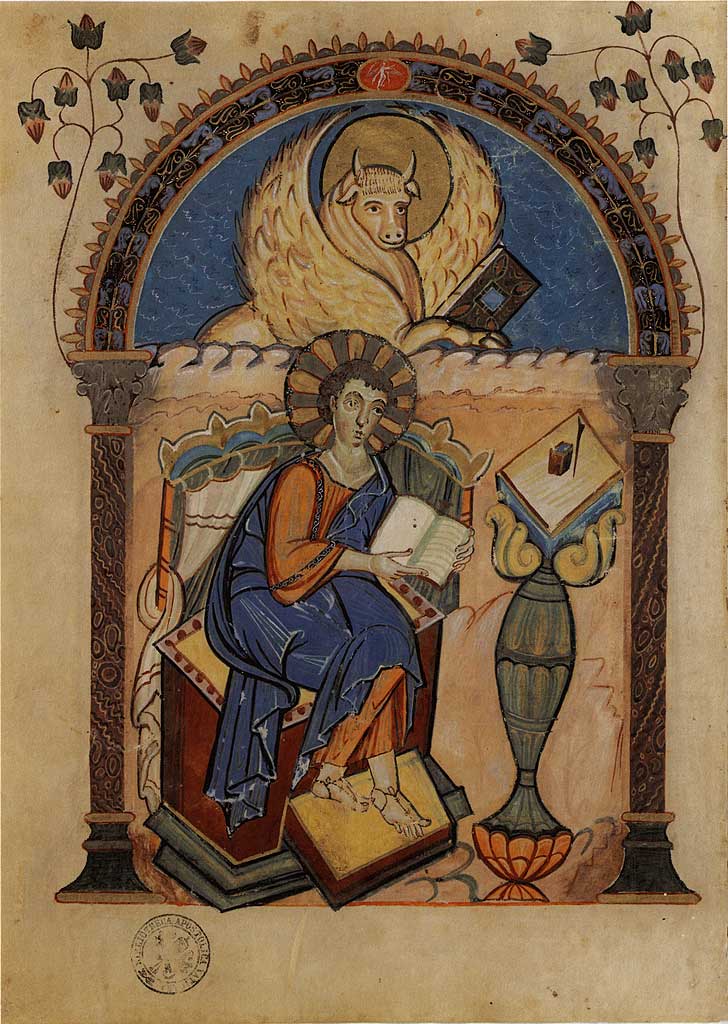
Their Story
Luke arrived at faith as a stranger. Born in Antioch to a non-Jewish family, he was a physician trained in Greek medicine and philosophy—disciplines that demanded skepticism and empirical proof. When he encountered the early Christian movement, he didn't blindly accept their claims. Instead, he did what physicians do: he investigated. He interviewed witnesses. He documented meticulously. This was his struggle: to reconcile the miraculous with the rational, to make sense of a carpenter's resurrection through the lens of medical science and historical rigor.
Luke's genius was refusing to choose between reason and faith. While other evangelists wrote from inner conviction, Luke wrote like a doctor examining evidence. He compiled the Gospel bearing his name and the Acts of the Apostles with the precision of a scholar, yet infused with the compassion of a healer. He traveled with Paul, witnessing persecution and doubt firsthand. He painted icons. He served the sick. He transformed his outsider status—his foreignness, his training, his analytical mind—into gifts. Luke proved you don't need to abandon your gifts to find belonging; you consecrate them.
By tradition, Luke eventually reached Thebes, where he faced martyrdom around age 84. But his real legacy was already written: the most carefully researched gospel, the one that emphasizes Christ's mercy to the marginalized, the poor, the women society forgot. The outsider documented a faith for outsiders.
Why People Pray to Luke the Evangelist
Today, people pray to Luke when they struggle with doubt and faith, when their rational mind wars with their spiritual hunger. Physicians, artists, and researchers find in him a patron who sanctifies intellectual rigor without diminishing wonder. Those who feel like outsiders—too educated, too skeptical, too different—find in Luke permission to bring their whole selves to faith. He intercedes for those caught between worlds, showing us that our alienation can become our ministry.
Lasting Impact
Luke created a blueprint for faithful scholarship. His Gospel remains Christianity's most detailed historical record, emphasizing Christ's concern for the forgotten. Artists, physicians, and writers venerate him as the saint who proved that meticulous observation and profound love are not opposites but partners in revealing truth.