Their Story
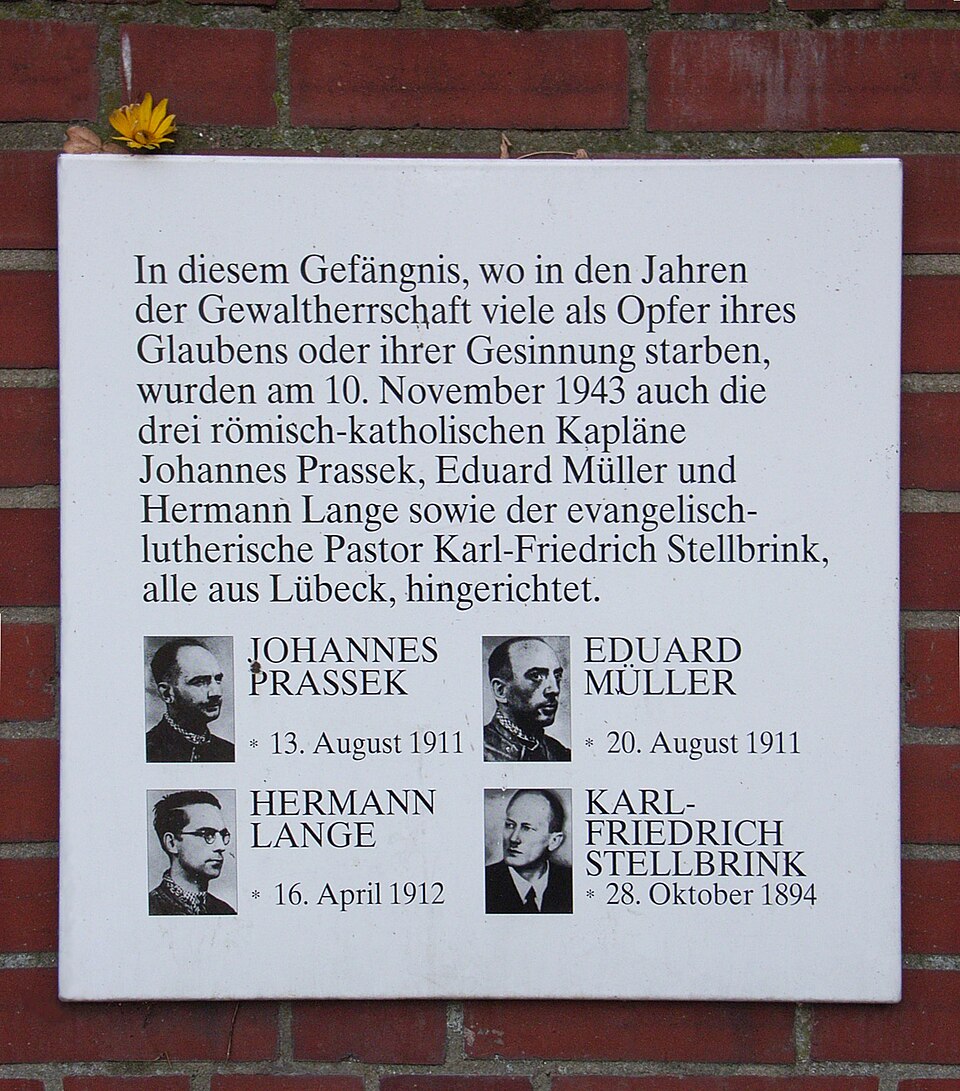
They were ordinary men in extraordinary times. Johannes Prassek, Eduard Müller, Hermann Lange, and Karl Friedrich Stellbrink were pastors doing what pastors do—serving their congregations in Lübeck during the darkest chapter of modern history. But they faced a terror that tested everything: a regime demanding absolute obedience, threatening anyone who dared speak truth.
Their friendship, forged in 1941, became their strength and their peril. Catholic and Lutheran, they crossed a divide most never dared breach. They shared sermons questioning Nazi ideology. They whispered forbidden words from Bishop von Galen. They listened to each other's doubts and fears in the dead of night. On Palm Sunday 1942, after British bombs razed their city and killed over 300 civilians, Stellbrink asked from his pulpit: "In the misery of our home city, do we hear God's voice?" It was a question—not an answer. But to the regime, it was sedition.
One by one, they were arrested. April. May. June. Interrogated. Tortured. Imprisoned. In their final letters from Hamburg's Holstenglacis Prison, they wrote not of rage but of peace—a peace born from choosing conscience over survival. On November 10, 1943, they walked to the guillotine together, their blood literally mingling on the executioner's floor. "We are like brothers," Lange had said. In death, they proved it. Four men. Three minutes apart. One unstoppable witness to the power of ecumenical love and moral courage.
Why People Pray to Lübeck martyrs
In an age of convenient silence and tribal divisions, the Lübeck Martyrs speak to anyone wrestling with conscience. Do I speak up when it costs something? Can I stand with those different from me? They are patrons for those battling moral cowardice, sectarian hatred, and the paralysis of fear. People pray to them when facing pressure to compromise their faith, when longing for courage to act justly, and when seeking unity across divides that seem unbridgeable.
Lasting Impact
Their ecumenical witness—Catholic and Lutheran blood mingling as one—shattered the myth that faith divides us from moral action. The Lutherkirche in Lübeck stands as their memorial, a living symbol that conscience knows no denomination. They remind every generation that some truths are worth dying for, and some friendships are worth betraying authority for.