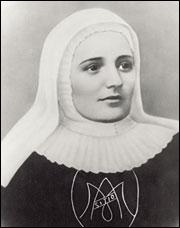
Their Story
Laura Montoya grew up in rural Jericó, Colombia, witnessing the marginalization of Indigenous communities firsthand. Her early years were marked by witnessing systemic abandonment—entire peoples invisible to the Church, dismissed by society. She felt the weight of that injustice but lacked resources, connections, and institutional power to change anything. Many would have accepted this as simply how the world worked. Laura didn't.
She entered religious life not as an escape, but as a calculated act of rebellion. While many sisters remained cloistered in comfort, Laura made a radical choice: go directly into the Amazon, into remote territories, into the lives of the Emberá and other Indigenous nations. She learned their languages. She sat with them. She listened. For decades, she moved through dense rainforest, facing disease, poverty, and the slow heartbreak of working in systems resistant to change.
In 1914, at an age when many would retire into contemplation, Laura founded the Congregation of the Missionary Sisters of the Immaculate Virgin Mary and Saint Catherine of Siena. This wasn't abstract spirituality—it was a living commitment to reach those others had written off. She trained generations of women to see the sacred in the marginalized, to understand that missionary work meant presence, not conversion by pressure. Her life proved that transformation begins not in grand gestures, but in showing up, again and again, for those the world forgets.
Why People Pray to Laura of Saint Catherine of Siena
Laura intercedes for those working with vulnerable populations—social workers, educators, healthcare providers in underserved communities. People pray to her when they feel overwhelmed by systemic injustice, when individual effort seems insignificant against massive suffering. She embodies the grace of persistent, faithful work in impossible conditions. Her intercession comforts those who've dedicated their lives to the forgotten, reminding them their labor is witnessed, blessed, and transformative.
Lasting Impact
Laura's Congregation continues her work across Latin America and beyond, serving Indigenous and marginalized communities. She redefined what missionary spirituality means—shifting focus from conversion to dignity, from charity to justice. Her canonization in 2013 affirmed that holiness isn't found in escape from the world's pain, but in its redemptive embrace.