Their Story
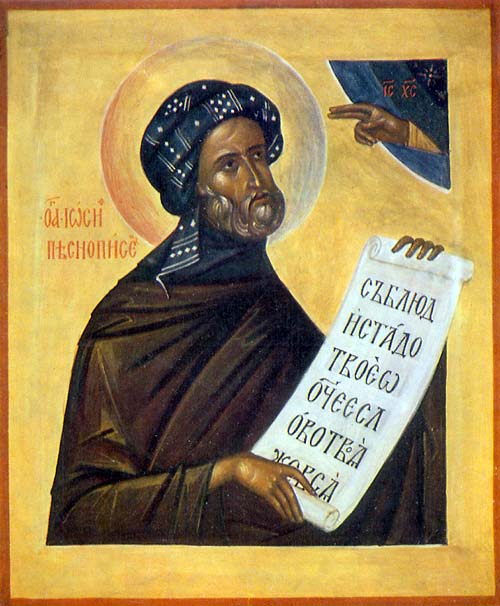
Born around 816 in Sicily, Joseph the Hymnographer felt an early calling towards a monastic life, drawn to the beauty and depth of faith expressed through hymns. He joined a monastic community where he honed his skills as a liturgical poet, using his gift to inspire and uplift others in worship. His melodies and verses became a vital part of Orthodox liturgy, helping to shape the spiritual experiences of many.
However, Joseph's journey was not without struggle. The rise of Iconoclasm presented a formidable challenge to his beliefs, as it sought to diminish the veneration of icons and sacred images. Unyielding in his commitment to the Orthodox faith, Joseph boldly defended the importance of icons as windows to the divine. His hymns became not only expressions of beauty but also powerful declarations of faith, reinforcing the value of tradition and spiritual devotion in the face of opposition.
As he settled in Thessalonica, Joseph continued to compose hymns that resonated deeply within the hearts of the faithful. His works would influence generations to come, as they carried messages of hope, love, and unwavering faith. By the time of his death on April 3, 886, Joseph had become a revered figure, a beacon of resilience and creativity in the church.
Why People Pray to Joseph the Hymnographer
Today, people turn to Joseph the Hymnographer for inspiration in their spiritual lives, seeking his intercession in matters of creativity and faith. His ability to blend art with devotion encourages individuals to express their beliefs through various forms of creativity, fostering a deeper connection with the divine.
Lasting Impact
Joseph's legacy endures in the rich tradition of Orthodox hymnography. His works continue to be sung in churches worldwide, reminding the faithful of the power of music in worship and the importance of standing firm in one’s beliefs.
Where Venerated
- Worldwide Roman Catholic Church