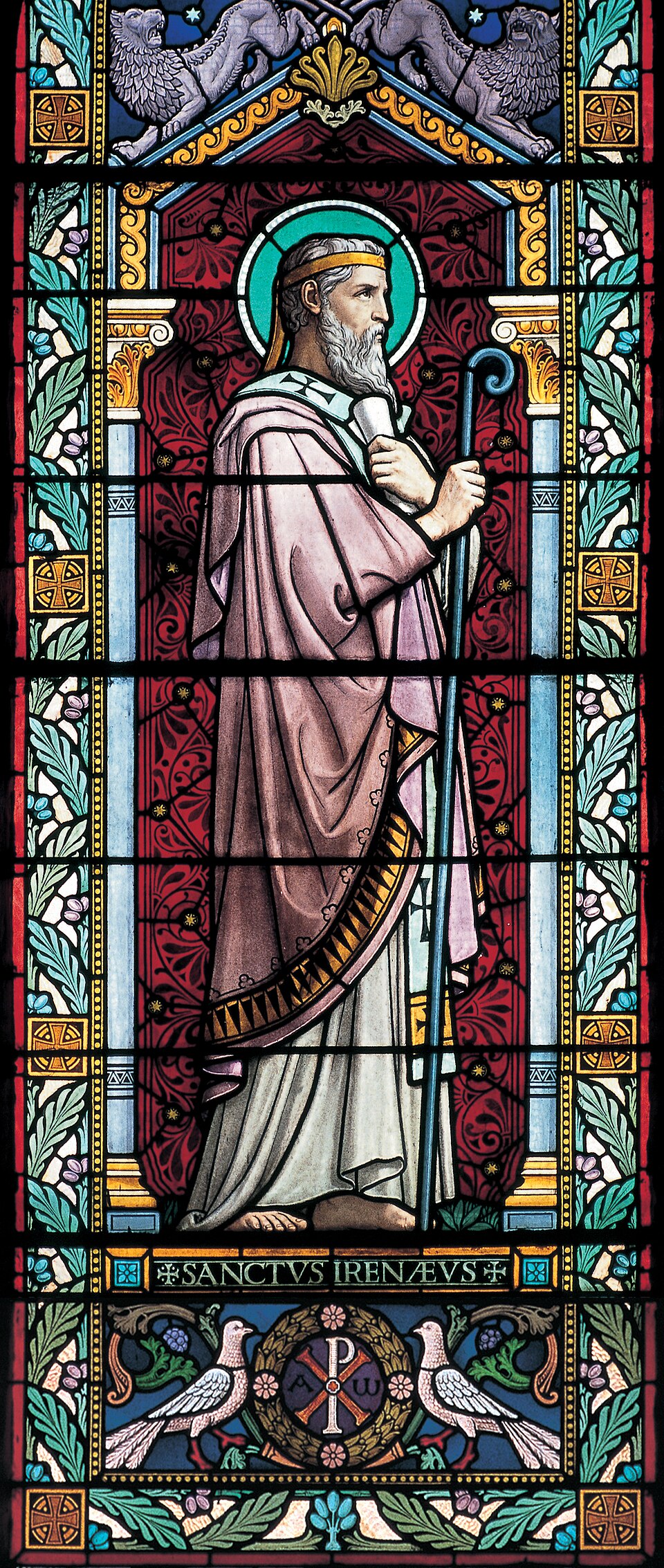
Their Story
Born in Smyrna, Irenaeus inherited a world fracturing at its spiritual seams. Gnostic teachers, false gospels, and competing visions of Christ threatened to shatter the young Church from within. He watched confusion spread like wildfire—people hungry for truth, but easy prey for charismatic deceivers. The weight of this crisis haunted him. How could he defend a faith he'd inherited but had to prove?
Irenaeus didn't flee this chaos. Instead, he became a student of it. He studied the heresies that plagued his age, learning their arguments as intimately as a wrestler learns his opponent's grip. When he became Bishop of Lyon, he faced the most dangerous challenge of his life: the Gnostic movement was seducing his own congregation. He could have compromised. Many bishops did. Instead, he wrote *Against Heresies*—a monumental work that refused easy answers, meeting error with patient, relentless clarity.
What made Irenaeus extraordinary was not certainty—it was love. He defended orthodoxy not out of anger, but out of pastoral concern. He taught that God's purpose wasn't to condemn humanity, but to elevate it through Christ. Even facing persecution and eventual martyrdom, he remained a bridge-builder, insisting that true faith must be lived, not merely defended. His transformation from an anxious scholar into a steadfast guardian of truth showed that our deepest doubts often become our greatest strengths.
Why People Pray to Irenaeus of Lyon
In an age of spiritual confusion and competing truths, Irenaeus remains a luminous guide. People turn to him when overwhelmed by false teachings, conflicting worldviews, and the anxiety of discerning what to believe. He intercedes for those struggling with doubt, showing that questioning can lead to deeper faith. He also inspires anyone called to defend truth with compassion—teachers, parents, and leaders who must guide others through confusion without hardening their hearts.
Lasting Impact
Irenaeus shaped Christian theology for two millennia. His defense of apostolic tradition, his clarification of the Canon, and his compassionate orthodoxy became the blueprint for how the Church would think. He proved that intellectual rigor and pastoral care are not opposites—they are partners in preserving faith that transforms lives.