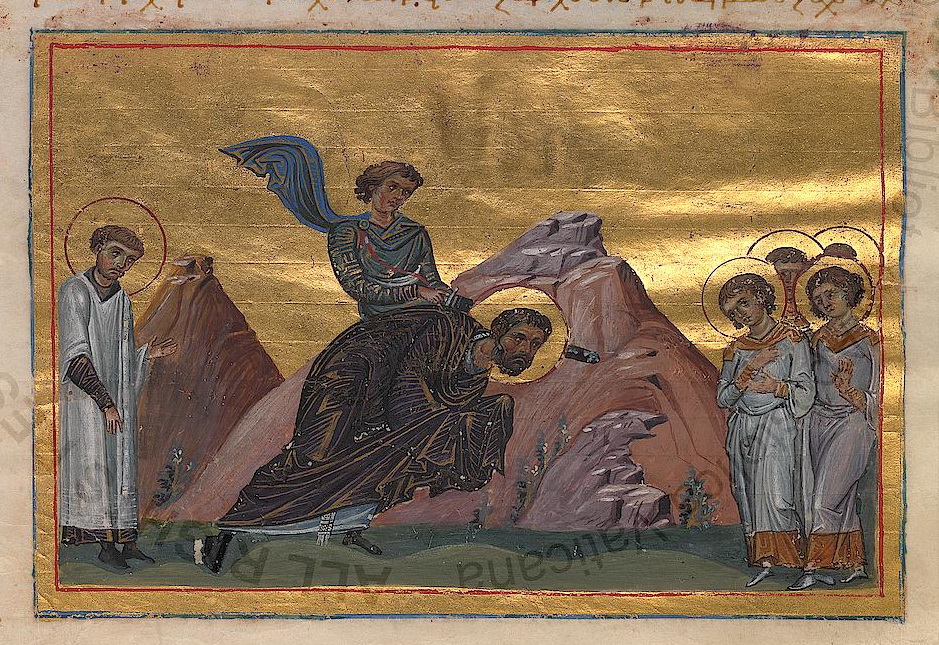
Their Story
In 250 AD, Alexandria trembled under Emperor Decius's ruthless decree: sacrifice to pagan gods or die. Faustus was a priest—a spiritual leader expected to guide others, yet facing his own paralyzing fear. Abibus served as a deacon, a trusted administrator of the church's charitable work. Dionysius worked as a lector, reading Scripture to the faithful. These were not fearless warriors born for martyrdom. They were community men with doubts, families, attachments to life. When soldiers came, they could have recanted. Many Christians did—not from cowardice alone, but from the human weight of choosing death over survival.
Yet something shifted in them. Perhaps it was faith that had been tested in quiet moments—in prayers whispered in hiding, in conversations that strengthened their resolve. When the moment came, Faustus, Abibus, and Dionysius chose witness over compromise. They died alongside ten companions: Andronicus the soldier, Cyriacus the acolyte, Theocistus the sea captain, and others whose names echo across centuries. Their execution wasn't dramatic defiance—it was the quiet, terrible dignity of people who understood that some truths cannot be unsaid, some convictions cannot be abandoned.
They died as they lived: faithful, present, ordinary. Yet in their ordinariness lies their power. They showed that holiness doesn't require exceptional circumstances—it requires only the courage to remain true when everything demands you betray yourself.
Why People Pray to Faustus, Abibus and Dionysius of Alexandria
Faustus, Abibus, and Dionysius remind us that integrity costs something real. In a world demanding constant compromise—at work, in relationships, in conscience—they stand as witnesses to the power of refusing to bend. People facing persecution, discrimination, or pressure to abandon their values turn to these saints. They also inspire those seeking courage in ordinary moments: standing up for truth when silence is easier, remaining faithful when faith is unpopular. Their feast day (September 6) calls believers to examine their own convictions.
Lasting Impact
The martyrs of 250 AD became foundational to Coptic and Catholic tradition, their names preserved in liturgy and prayer for nearly 1,800 years. They transformed a moment of imperial violence into eternal testimony: that ordinary people possess extraordinary strength when guided by faith, and that fidelity—even unto death—leaves an indelible mark on history.