Their Story
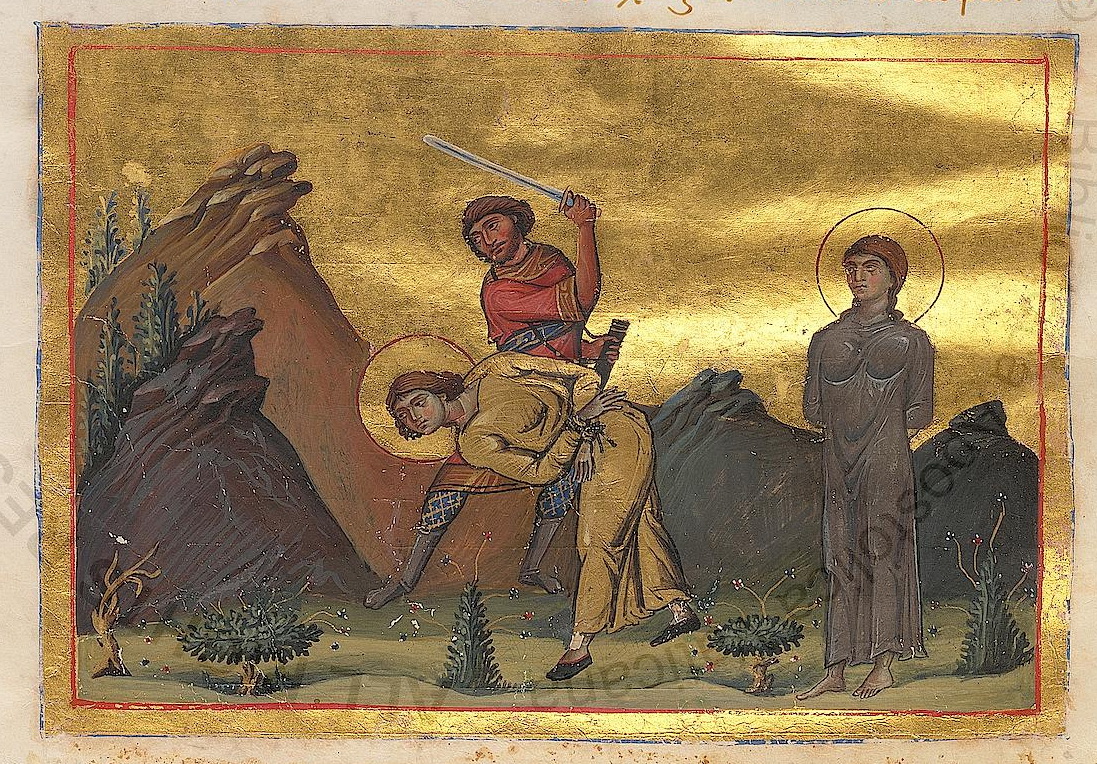
Eulampius lived in constant fear. In Nicomedia around 310 AD, being Christian wasn't just unpopular—it was a death sentence. He spent his days anxious, moving quietly through markets, helping hidden believers survive in caves outside the city. One day, doing something as ordinary as buying supplies for those in hiding, he was arrested. The whip came hard and fast. Roman soldiers wanted to break him, to make him renounce. But Eulampius refused.
Then something extraordinary happened. His sister Eulampia watched from the crowd. She could have disappeared, saved herself, lived quietly. Instead, she stepped forward—a dangerous act of defiance—and embraced her bleeding brother. That moment of vulnerability, that choice to say 'I am his sister, I am one with him,' sealed her fate. Both were executed the next day.
But their sacrifice didn't die with them. Two hundred Roman soldiers—trained to kill, trained to obey—witnessed the siblings' courage and conversion. They saw something worth dying for: faith so pure it overcame fear itself. Those soldiers laid down their swords and became martyrs too. Eulampius and Eulampia transformed an execution ground into a threshold of grace. They proved that sometimes the most powerful resistance is simply refusing to let love be silenced.
Why People Pray to Eulampius and Eulampia
People turn to Eulampius and Eulampia when facing impossible choices—when loyalty costs everything, when standing for what's right feels lonely. They inspire those struggling with persecution, injustice, or the fear of speaking truth. In modern times, they strengthen activists, whistleblowers, and anyone who must choose conscience over comfort. Their feast day (October 10) reminds us that small acts of solidarity can ripple outward in ways we'll never fully see.
Lasting Impact
Eulampius and Eulampia's witness sparked a conversion that echoed through centuries. Their willingness to be vulnerable transformed not just individuals but entire communities' understanding of faith. They remain symbols of how courage rooted in love—not aggression—becomes the most subversive force against tyranny. Their legacy teaches that sometimes the greatest victory is simply refusing to be silenced.