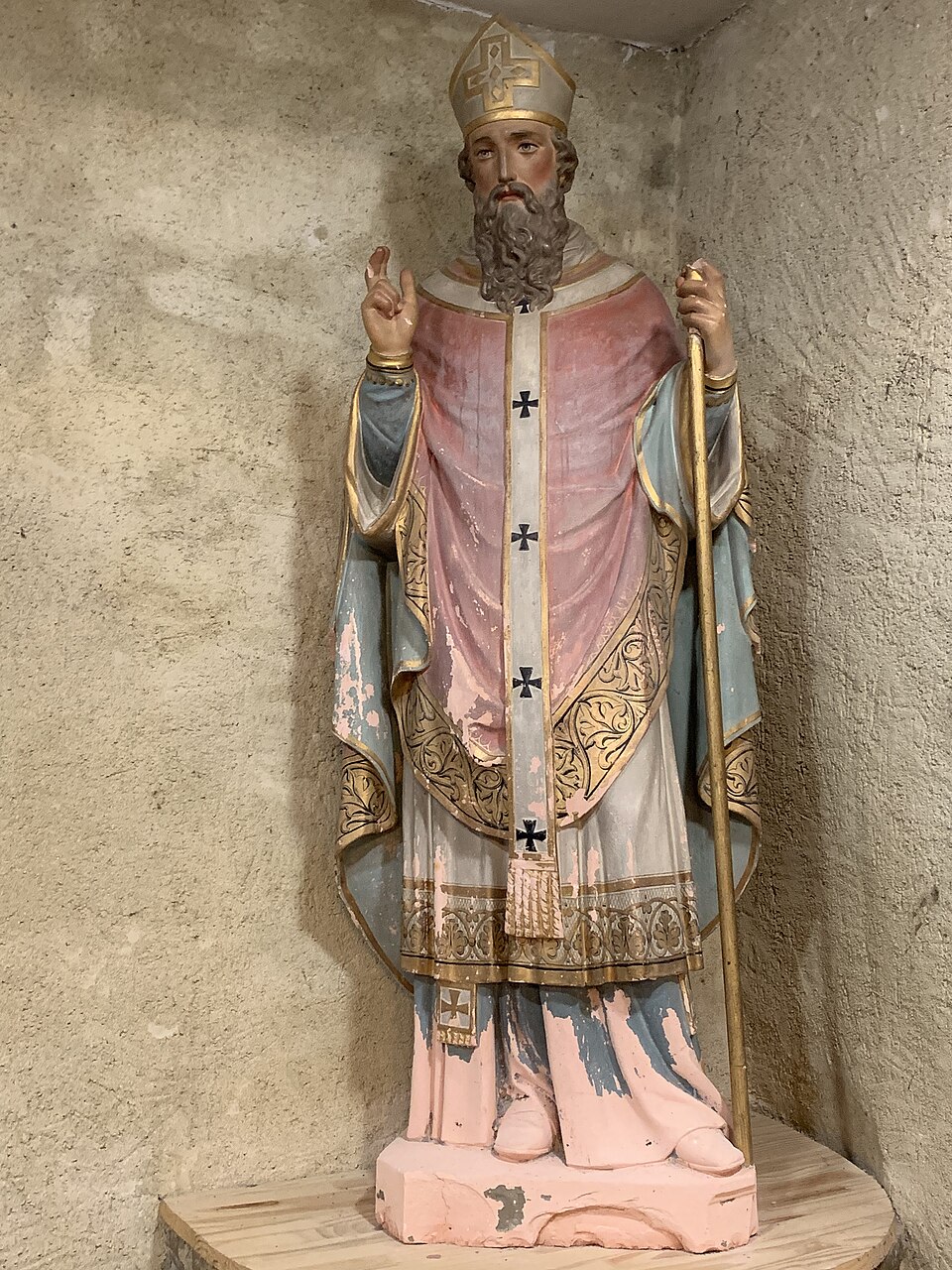
Their Story
Desiderius began life with every advantage. Born into Aquitanian nobility, possibly cousin to Queen Brunhild herself, he inherited wealth, connections, and expectations. Yet privilege can be its own prison. The records hint at a man wrestling with the emptiness of status—surrounded by luxury but haunted by something deeper. Many nobles of his era clung to their fortunes, using faith as decoration. Desiderius chose differently.
When he became Bishop of Auxerre around 614, he faced a fractured church and a suffering people. Rather than hoard his inheritance, he made a radical choice: he poured 300 pounds of precious liturgical vessels—gold, silver, sacred treasures—into St. Stephen's Church. In the 7th century, this wasn't modest. This was revolutionary. He took his family's accumulated power and transformed it into beauty that would serve strangers for centuries. His gift declared something startling: that true nobility meant emptying yourself for others.
Desiderius died in 621, having spent seven years as bishop. He never became famous for miracles or mystical visions. His sainthood rests on something quieter, more difficult: the choice to let go. In a world obsessed with legacy, he built his through generosity. That 300 pounds of treasure was stolen centuries later in 1567, but the lesson remained: what we give away is what we keep forever.
Why People Pray to Desiderius of Auxerre
Modern seekers turn to Desiderius when wrestling with wealth, purpose, and identity. In an age of inequality and materialism, he offers a revolutionary model: that abundance becomes meaningful only through release. People pray to him when struggling to give generously despite fear, when caught between their privileged position and social conscience, and when seeking permission to let go of what society tells them defines them. His life whispers: your worth isn't your net worth.
Lasting Impact
Desiderius's seven-year tenure as bishop left no political empire, no theological treatises. Yet his legacy is profound: he demonstrated that sanctity requires sacrifice, that true nobility means serving the dispossessed, and that generosity transcends time. His act of giving became a mirror for future generations questioning what really matters.