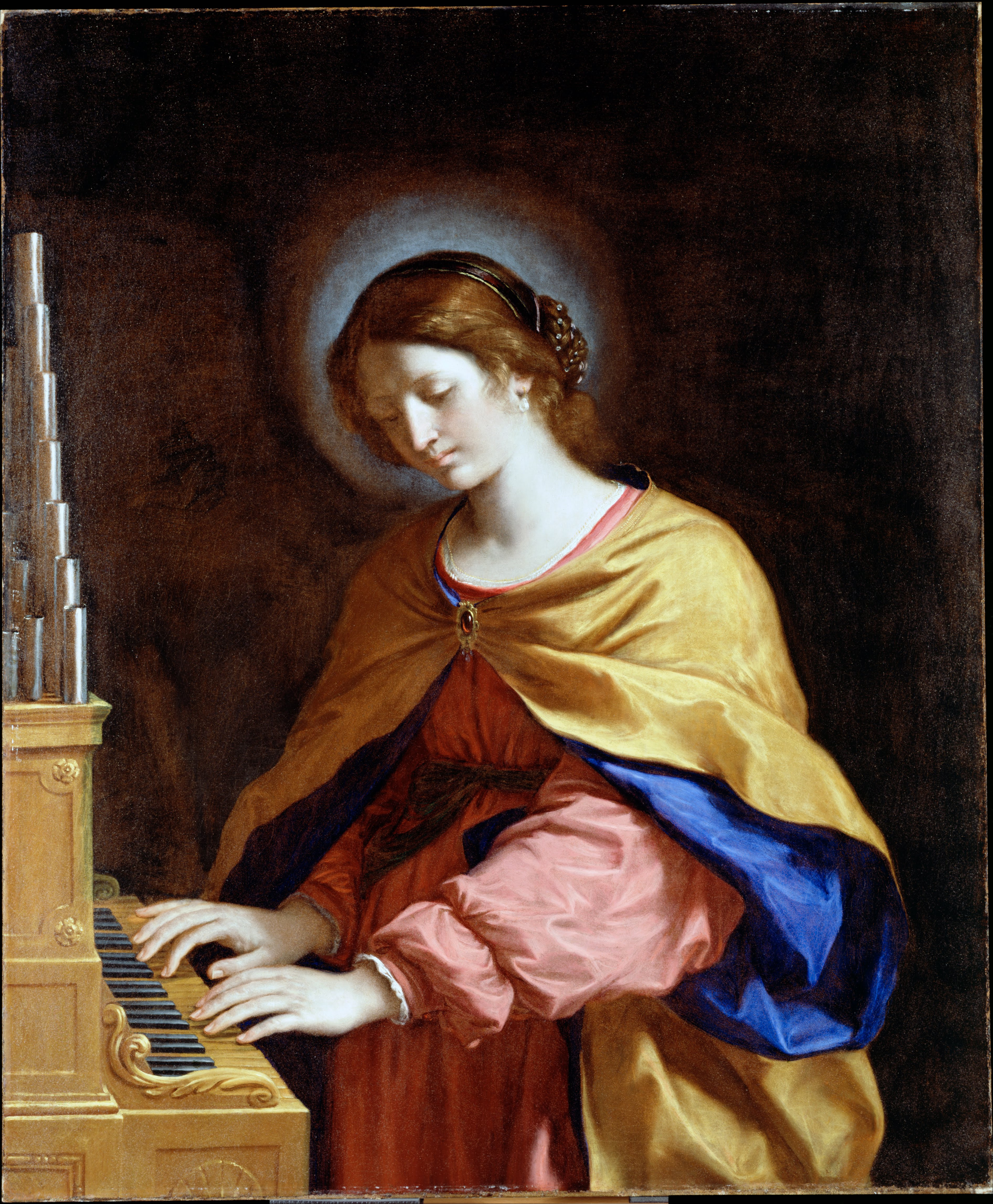
Their Story
Cecilia's story begins not with triumph, but with a fracture between her deepest convictions and her family's demands. As a young Roman woman of noble birth, she had made a private vow of virginity—a sacred commitment to God. But her parents had other plans. In the customs of her time, marriage was not a choice; it was an obligation. They wed her to Valerian, a pagan nobleman, and Cecilia faced the crushing reality that no one was listening to her. Her voice didn't matter. Her vow didn't matter.
Yet Cecilia refused to be silenced by circumstance. On their wedding night, while musicians played and the household celebrated, she sang inwardly to the Lord—not songs of despair, but of unwavering faith. This interior defiance became her superpower. She didn't rage or resist violently; instead, she spoke truth with such quiet conviction that Valerian himself became transformed. He converted to Christianity. His brother Tiburtius followed. In Rome's darkest hours of Christian persecution, these three—husband, brother-in-law, and the woman who was supposed to obey—stood together as martyrs.
Cecilia's witness teaches us that our most powerful moments often come through vulnerability and truth-telling, not force. She was imprisoned, condemned to death by suffocation, yet survived. She sang through it all. When persecution finally claimed her life around 230 AD, she left behind an unshakeable legacy: that even in systems designed to silence us, our deepest convictions—expressed with grace and courage—can transform the world around us.
Why People Pray to Cecilia
Musicians, artists, and anyone struggling to be heard turn to Cecilia today. She embodies the artist's eternal tension: the pressure to conform versus the call to express truth. People pray to her when facing creative blocks, when institutions try to silence them, or when they question whether their voice matters. She reminds us that authenticity—sung from the heart, even in whispers—has revolutionary power. Cecilia also intercedes for those caught between personal conviction and family expectation, offering solace to the conflicted and courage to the voiceless.
Patron Saint Of
Lasting Impact
Cecilia became Christianity's patron saint of music and musicians—not because she performed concerts, but because she understood that true music is the soul's honest expression. Her feast day (November 22) celebrates artists across all disciplines. Churches, music conservatories, and cathedrals worldwide bear her name, honoring her legacy as the saint who transformed suffering into song, silence into testimony.