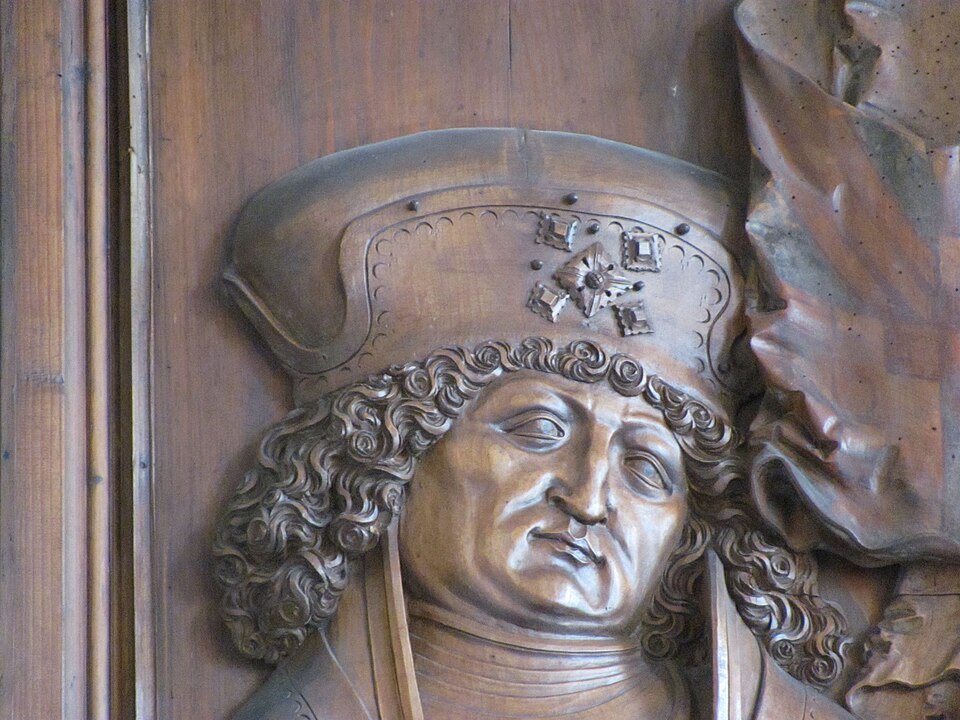
Their Story
Bernhard II arrived in the world weighted with expectations. Born in 1428 to the powerful House of Zähringen, he was groomed from childhood to rule—destined for the margraviates of Pforzheim, Eberstein, and Besigheim. His family was devoutly Catholic, yet this very piety created an impossible tension: would he serve God or his territories? The young margrave received the finest education befitting a sovereign, yet each lesson in statecraft and diplomacy seemed to pull him further from what his soul actually craved.
By his twenties, Bernhard faced a crisis that no amount of noble birth could solve. The weight of inherited power—the lands, the politics, the endless demands of feudal duty—began to suffocate him. While his brother Karl I played the game of imperial connections and dynastic marriage, Bernhard retreated inward, wrestling with a deeper calling. Around 1450, he made his radical choice: he renounced his claims to rule. Instead of accepting his margraviate, he entered religious life, seeking poverty and contemplation rather than palaces and power.
This wasn't a slow fade into monasticism—it was a decisive rupture with everything his family had prepared him for. Bernhard became a pilgrim, traveling to Italy in spiritual search. His journey took him to Moncalieri, near Turin, where in 1458, at barely thirty years old, he died in humble obscurity. Yet in that brief, surrendered life, something transformed. The Catholic Church recognized what others had missed: that Bernhard's refusal of power was itself a profound holiness. He was beatified in 1769—a young man vindicated centuries later for choosing grace over greatness.
Why People Pray to Bernhard II, Margrave of Baden-Baden
Bernhard speaks to anyone suffocating under inherited expectations or societal pressure to succeed. In our achievement-obsessed age, he offers radical permission to step off the ladder. People pray to him when facing career crossroads, family pressure, or the terrifying question: "Is this life actually mine?" He shows that true courage isn't climbing higher—it's releasing your grip entirely and trusting what remains.
Lasting Impact
Bernhard II's beatification challenged Renaissance ideals of power and ambition, whispering to centuries of believers that sanctity might look like failure by worldly standards. His short life became a mystical testimony: that surrendering everything can be more powerful than inheriting kingdoms. He remains a patron for those seeking liberation from false callings.