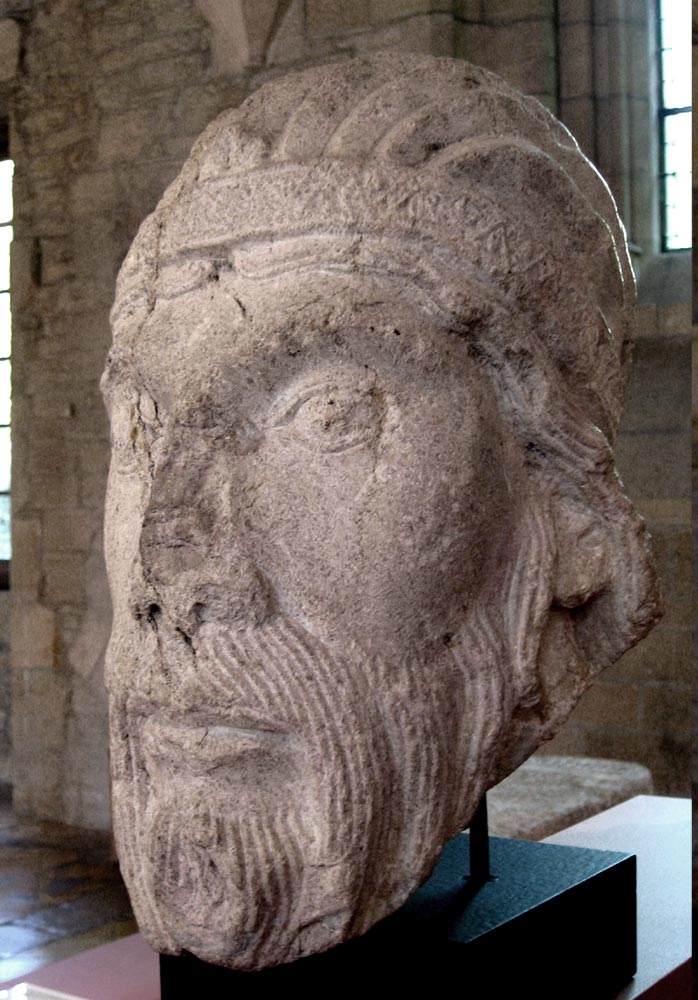
Their Story
Benignus arrived in Burgundy as an unknown priest, likely from Lyon, carrying the Gospel into hostile territory during the brutal reign of Emperor Aurelian. He was neither famous nor celebrated in his lifetime. History barely recorded his name. Yet he persisted in his mission, preaching to communities indifferent or hostile to his message. He faced the constant terror of persecution—knowing that faith in Christ could cost him everything.
Around 270–275 AD, that fear became reality. Benignus was martyred near the Roman city of Divio (modern Dijon), his grave lost among thousands in a vast necropolis outside the city walls. For centuries, no one knew where he lay. He became a ghost—a saint without a shrine, a martyr without recognition.
But then came the vision. A bishop named Gregory of Langres, Benignus's own great-grandson, initially dismissed the common people's veneration of an unmarked grave as pagan superstition. One night, Gregory received a divine revelation: this forgotten burial site held Benignus himself. The bishop immediately restored the tomb and built a basilica over it. Within generations, a thriving abbey flourished at the spot. Benignus—the overlooked, the lost, the silenced—became the patron saint and founding apostle of Burgundy. His obscurity had been temporary. His impact was eternal.
Why People Pray to Benignus of Dijon
Modern pilgrims turn to Benignus when facing invisibility, rejection, or the fear that their faithful work goes unnoticed. He intercedes for missionaries, teachers, and caregivers who labor without recognition. In a world obsessed with visibility and validation, Benignus reminds us that God sees what the world overlooks. People pray to him for courage to persist in purpose even when unappreciated, and for trust that faithful seeds eventually bear fruit.
Lasting Impact
Benignus transformed Dijon from a minor Roman outpost into a spiritual center of medieval Christendom. The Basilica of Saint Bénigne became a pilgrimage destination and seat of monastic reform under the Cluniac order. His feast day, November 1st, links him eternally with All Saints—a fitting honor for one whose humble martyrdom ultimately sparked centuries of spiritual renewal across Burgundy.