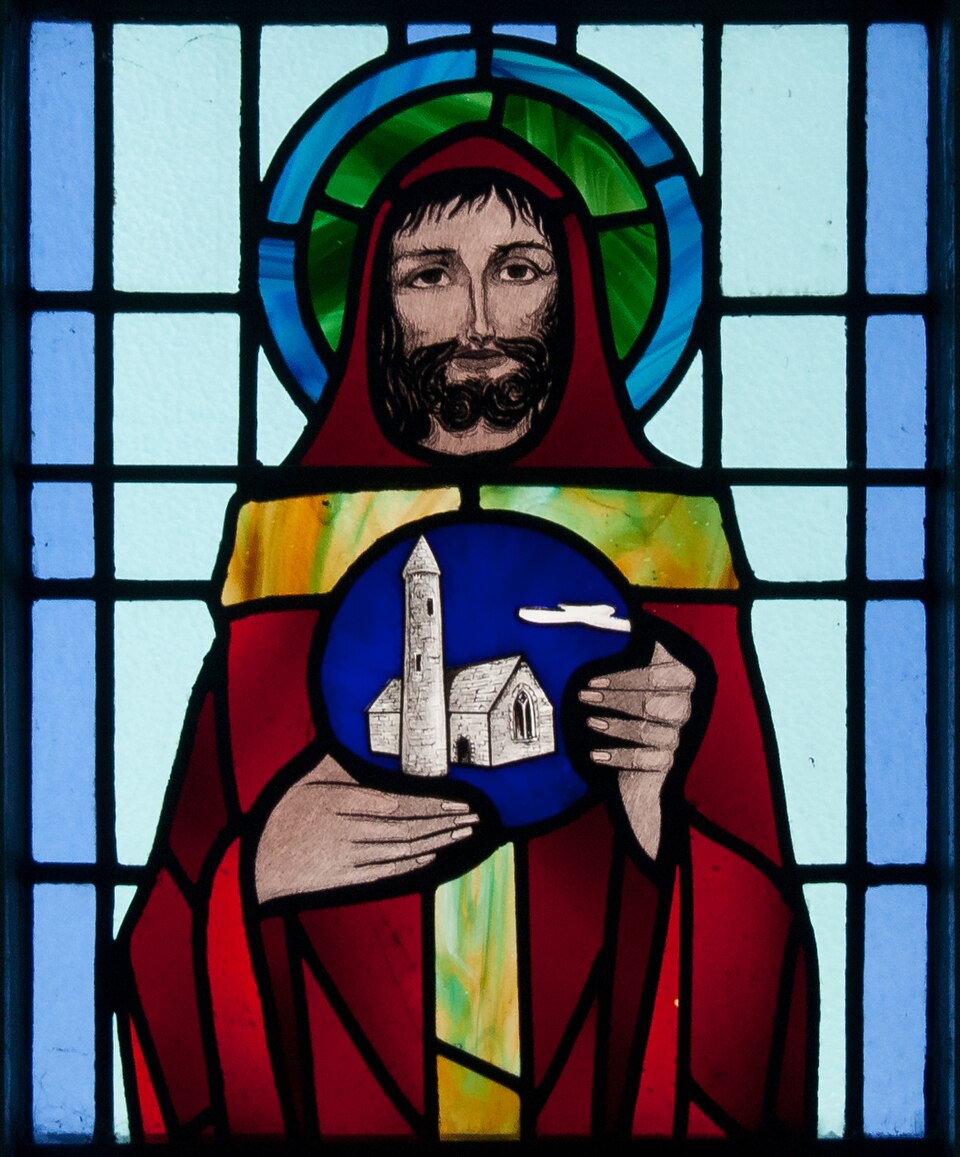
Their Story
Benignus began as an outsider to faith. Born into an Irish chieftain's household in County Meath, he inherited a world of warrior codes and tribal politics—not spiritual certainty. When Saint Patrick arrived to baptize him, Benignus faced an internal crisis: Should he abandon his family's traditions? Could a chieftain's son truly become a holy man? The very name he earned—Benignus, meaning "gentle"—felt like a weakness in a culture that prized strength and combat prowess.
Yet something shifted. Patrick saw potential where Benignus saw inadequacy. Chosen as the saint's favorite disciple and coadjutor, Benignus discovered his true gift wasn't warrior prowess—it was music, language, and sacred learning. He became "Patrick's psalm-singer," translating spiritual truths into melodies that moved hearts. His training in bardic traditions, once seemingly at odds with Christianity, became his superpower. He helped compile the Psalter of Cashel and the Book of Rights, fusing Irish culture with Christian faith rather than destroying it.
Benignus transformed his initial uncertainty into humility, his cultural knowledge into service. He didn't become a different person—he became fully himself. As first rector of Armagh's Cathedral School and founder of Kilbennan monastery, he proved that doubt wasn't disqualifying. His gentleness wasn't weakness. By the time he died in 467, Benignus had reshaped Irish Christianity itself, making it rooted in local soil while reaching toward heaven.
Why People Pray to Benignus of Armagh
Today, people turn to Benignus when wrestling with self-doubt and calling. If you've felt inadequate for the work you're meant to do, or wondered if your gifts are "too soft" for a harsh world, Benignus intercedes. He shows us that sensitivity, artistry, and gentleness aren't obstacles to purpose—they're often the very tools we're meant to wield. Artists, teachers, and those building bridges between cultures find in him a patron who understands the friction of transformation.
Lasting Impact
Benignus established Kilbennan monastery, becoming patron of Connacht and foundational to Irish ecclesiastical education. His synthesis of bardic tradition with Christian faith created a distinctly Irish Christianity that honored cultural roots while embracing faith. He demonstrated that conversion doesn't require erasure—it requires integration. His legacy endures in every monastery, school, and sacred music tradition that honors both soul and soil.