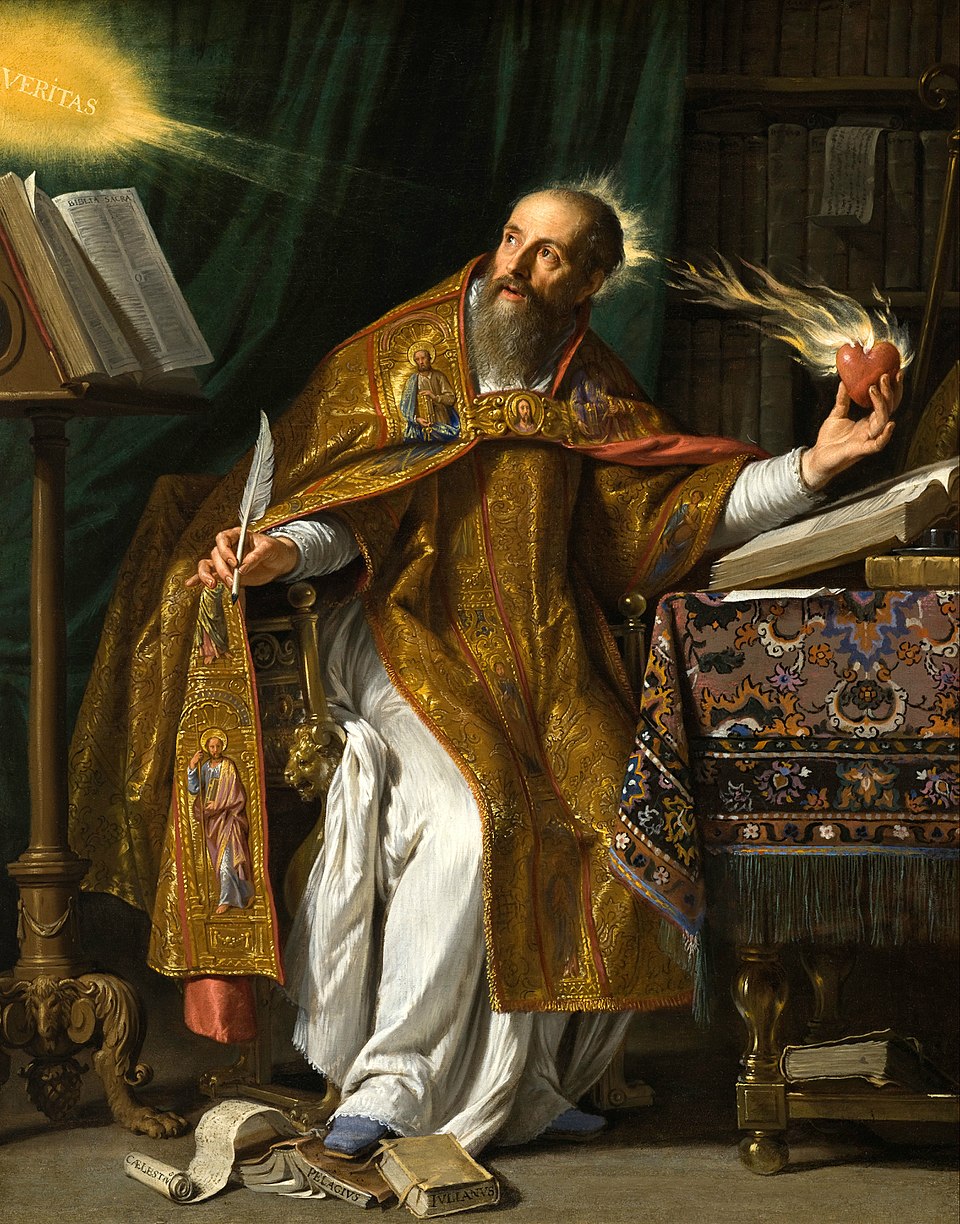
Their Story
Augustine was brilliant, ambitious, and utterly lost. Born in North Africa in 354, he chased success like a man possessed—climbing the ladder of Roman rhetoric and philosophy while drowning in what he called "the stinking swamp of lust." He lived with a woman he loved for thirteen years without marriage, fathering a son, all while his mother Monica prayed desperately for his salvation. His mind raced with competing philosophies; his heart pulled in every direction. He was restless, irritable, hungry for something he couldn't name.
At thirty-one, Augustine heard a child's voice in a garden: "Take up and read." He opened Scripture and encountered words that pierced his armor. Slowly, painfully, he surrendered—not his intellect, but his need to control everything through it. The transformation wasn't instantaneous ecstasy; it was genuine struggle, real tears, authentic wrestling with pride. He abandoned his prestigious career and embraced poverty and celibacy. Within decades, he became Bishop of Hippo and wrote the Confessions—the first spiritual autobiography in Western literature—shocking readers with his unflinching honesty about lust, ambition, and the soul's desperate longing for God. His writings shaped Christian theology for 1,600 years.
Why People Pray to Augustine of Hippo
Augustine speaks to the modern spiritual wanderer—the person whose intelligence wars with their faith, who struggles with desire and addiction, who feels fractured between who they pretend to be and who they actually are. People pray to him when trapped in cycles they can't escape, when ambition has hollowed them out, when they need permission to be honest about their failures. He models radical vulnerability before transformation, showing that our deepest struggles can become gateways to meaning.
Patron Saint Of
Lasting Impact
Augustine fused philosophy and theology in ways that shaped Western Christianity, Islam, and secular thought. His psychological insight into human motivation predates modern psychology by centuries. The Confessions remains one of humanity's most influential spiritual memoirs, teaching millions that confession—radical honesty about our condition—is the gateway to freedom and truth.