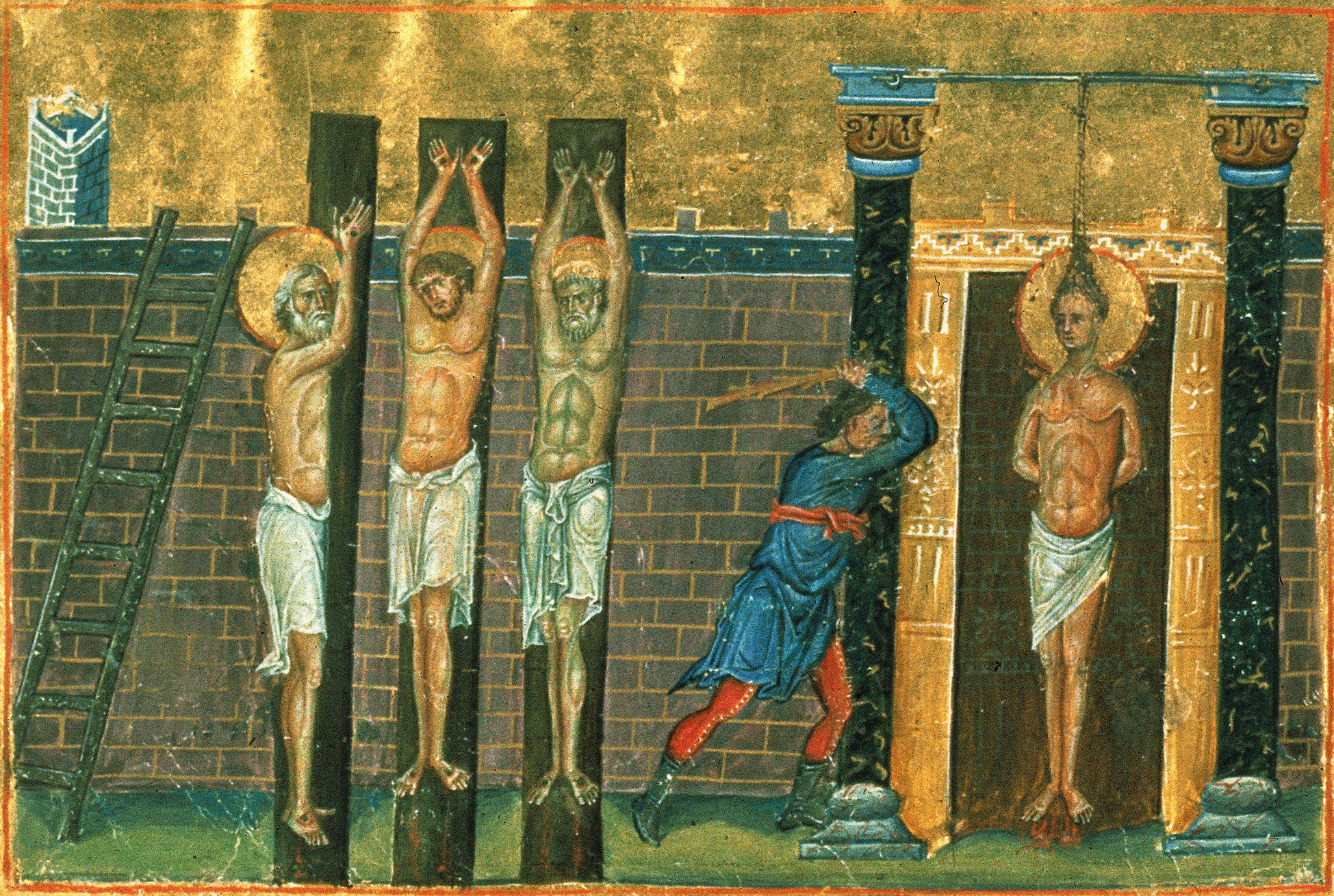
Their Story
Asterius, Claudius, and Neon were ordinary brothers living in Cilicia when everything fractured. Their own mother-in-law—someone bound to them by family ties—denounced them to Roman authorities. Her motive? Greed. She wanted their estate, their land, their livelihood. In one act of betrayal, the brothers lost everything that anchored them to the world: family trust, property, security.
When the proconsul Lysias summoned them, the choice was brutally simple: renounce their Christian faith and live, or hold firm and die. These weren't distant theologians debating doctrine in safety. They were men who felt the weight of what they'd lose—comfort, tomorrow, life itself. The fear must have been paralyzing. Yet something deeper than survival instinct took root in them. Joined by two women, Domnina and Theonilla (a widow facing the same impossible choice), they stood before the tribunal.
They refused. Not with defiant speeches, but with the quiet, shattering courage of people choosing principle when everything screamed at them to compromise. The Great Persecution of Diocletian was designed to break people at exactly this pressure point—family against faith, greed against conscience. The brothers endured, knowing their end. Their martyrdom in 303 AD became a silent roar across history: some things cannot be bought, stolen, or frightened away. Integrity, once chosen, becomes unbreakable.
Why People Pray to Asterius, Claudius, and Neon
Today, people turn to Asterius, Claudius, and Neon when facing impossible choices between loyalty and survival, or when wrestling with betrayal from those closest to them. They intercede for those pressured to compromise their values for material security, for families torn apart by greed, and for anyone needing courage to stand alone. In a world that constantly negotiates integrity for advantage, these saints remind us that some prices are too high to pay.
Lasting Impact
The martyrdom of these three brothers became a cornerstone story in early Christian tradition, venerated across both Catholic and Orthodox churches. Their feast days (August 23 and October 29) continue to inspire believers facing persecution and moral compromise. Their legacy whispers across time: betrayal may come from family, but integrity belongs only to you.