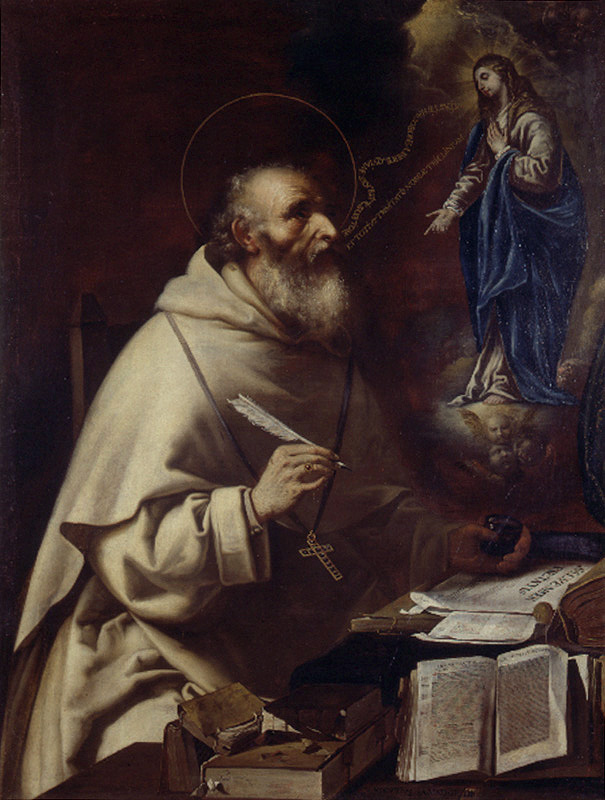
Their Story
Albert of Lauingen entered the Dominican order as a young man during an era of intellectual upheaval. While his peers viewed the natural world with suspicion—seeing science as a threat to faith—Albert wrestled with a different crisis: he feared his own ambition. The pursuit of knowledge felt dangerous, even prideful. Could a man dedicated to God truly spend his days dissecting minerals, studying animals, exploring the laws of physics? Medieval monasteries whispered warnings against such curiosity.
Yet Albert refused to accept this false choice. He threw himself into systematic study with passionate intensity—examining plants, cataloging minerals, discovering arsenic, mentoring a young Thomas Aquinas. His radical insight was deceptively simple: God created both Scripture and nature. Understanding one deepens understanding of the other. Where others saw conflict, Albert saw harmony. His decades of meticulous observation weren't distractions from holiness; they were acts of worship.
By his 80s, Albert had become Christianity's bridge between faith and reason—canonized centuries later as the patron saint of natural scientists. His true victory wasn't the accolades or titles (Bishop of Regensburg, Doctor of the Church). It was this: he showed that the questioning mind and the believing heart aren't enemies. They're partners in the search for truth.
Why People Pray to Albert the Great
Today, people seek Albert's intercession when caught between competing identities—the intellectual and the spiritual, the analytical and the faithful. Scientists pray to him when their work feels spiritually empty. Believers pray when their faith feels intellectually insufficient. Albert shows us both can be true. In our polarized age, his example reminds us that depth in one area doesn't require shallowness in another.
Patron Saint Of
Lasting Impact
Albert the Great transformed medieval thought by demonstrating that rigorous scientific inquiry and deep spirituality are not opposites but partners. His legacy established natural science as a legitimate path to understanding God's creation, influencing centuries of theological education and earning him veneration as the patron of scientists, philosophers, and all seekers of integrated truth.
Where Venerated
- Belgium on Albert's feast day