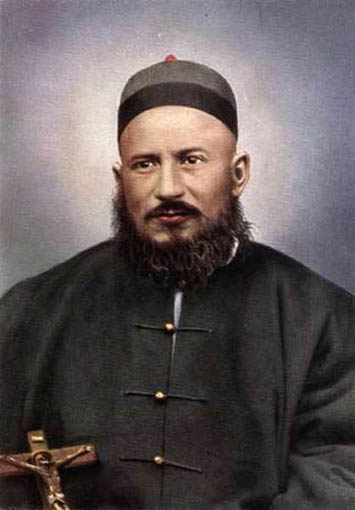
Their Story
Alberic Crescitelli was young when he felt the pull—a restlessness that the quiet Italian valleys couldn't satisfy. At seventeen, he entered seminary, seeking purpose in a life many would have considered settled. But seminary didn't calm him; it clarified something fiercer: he was meant for the margins, for places where faith demanded everything.
In 1888, at just 25, he left Italy for China—a land of strangeness, suffering, and profound spiritual hunger. For twelve years, he moved through Shaanxi province as Father Guo Xide, learning not just a language but a people's soul. His confreres testified to an almost haunting gentleness in him, a man who had resolved his youthful anxieties into bedrock conviction. Yet those years weren't easy. He faced isolation, cultural dissonance, the weight of witnessing poverty and injustice he couldn't always heal.
Then came the Boxer Rebellion. On July 21, 1900, as anti-foreign fury swept through the province, Crescitelli was captured. What followed was what Pope Pius XII later called 'perhaps one of the most atrocious deaths recorded in history'—torture, abandonment, cruelty that tested the limits of human endurance. Yet witnesses reported that even in agony, he remained serene, his faith unshattered. He died at 37, having given everything: his comfort, his safety, his very body. His death wasn't defeat; it was the final testimony of a man who had answered his calling completely.
Why People Pray to Alberic Crescitelli
Crescitelli speaks to those wrestling with big callings in uncertain times. People pray to him when they feel called to serve but fear they lack courage or strength. He intercedes for missionaries, aid workers, and anyone choosing sacrifice over security. In our age of comfort-seeking, his witness reminds us that meaningful lives are built on radical generosity—and that such giving, though costly, transforms us into something unshakably whole.
Lasting Impact
Canonized in 2000 as one of 120 Chinese Martyrs, Crescitelli's life bridges cultures and continents. He remains a beacon for modern missionaries and anyone discerning a vocation beyond themselves, proving that faithfulness—not comfort—is the truest measure of a life well-lived.